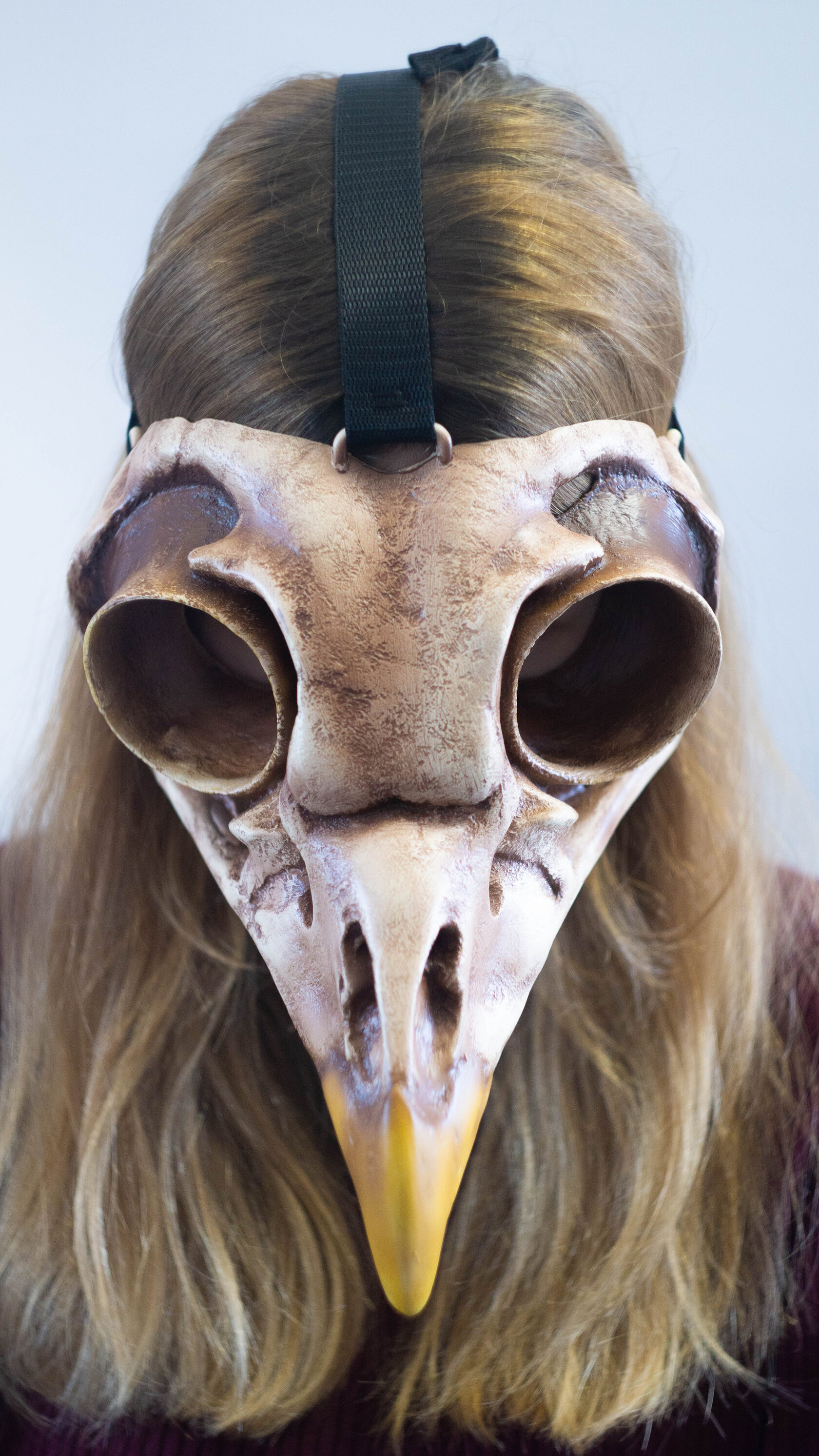
We'll tell you a bit more about this process.
Working with primer is fundamental. The primer needs to be quite thick. We apply it to the seams. After it dries, we use sandpaper. Then, we create the texture using the primer. It's easiest to work with horns — we apply the primer in a linear fashion, straight, for example, if they are deer or elk antlers. But for a ram's horns, for instance, we apply it in a circular motion. The texture turns out quite subtle.
Working with primer is fundamental. The primer needs to be quite thick. We apply it to the seams. After it dries, we use sandpaper. Then, we create the texture using the primer. It's easiest to work with horns — we apply the primer in a linear fashion, straight, for example, if they are deer or elk antlers. But for a ram's horns, for instance, we apply it in a circular motion. The texture turns out quite subtle.
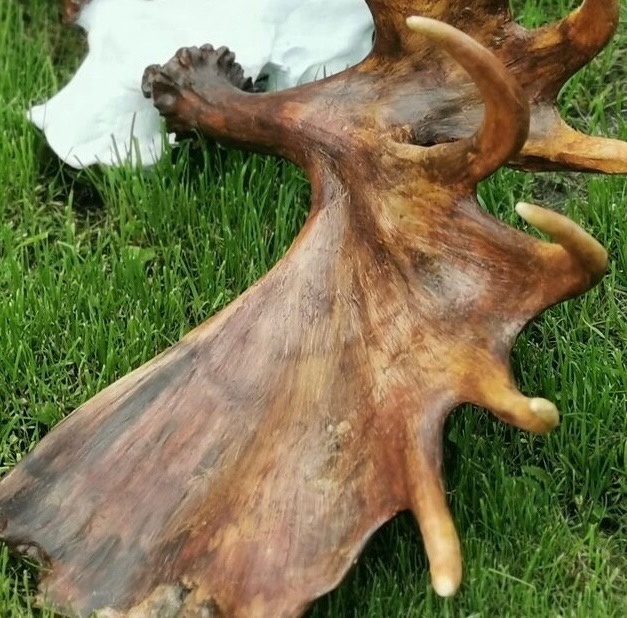
These lines can be made deeper by applying more primer. How the primer applies can even depend on the brush used. After drying, we go over it with sandpaper again until the texture is perfected.
We use a different method for priming skulls, although there are a few skulls and masks that we prime linearly, such as the Moriarty mask (this hides the print lines). But generally, on skulls, we use another method that creates a pore effect. To achieve this, we sort of stipple the primer with the brush. This technique also helps to conceal print lines well.
We use a different method for priming skulls, although there are a few skulls and masks that we prime linearly, such as the Moriarty mask (this hides the print lines). But generally, on skulls, we use another method that creates a pore effect. To achieve this, we sort of stipple the primer with the brush. This technique also helps to conceal print lines well.
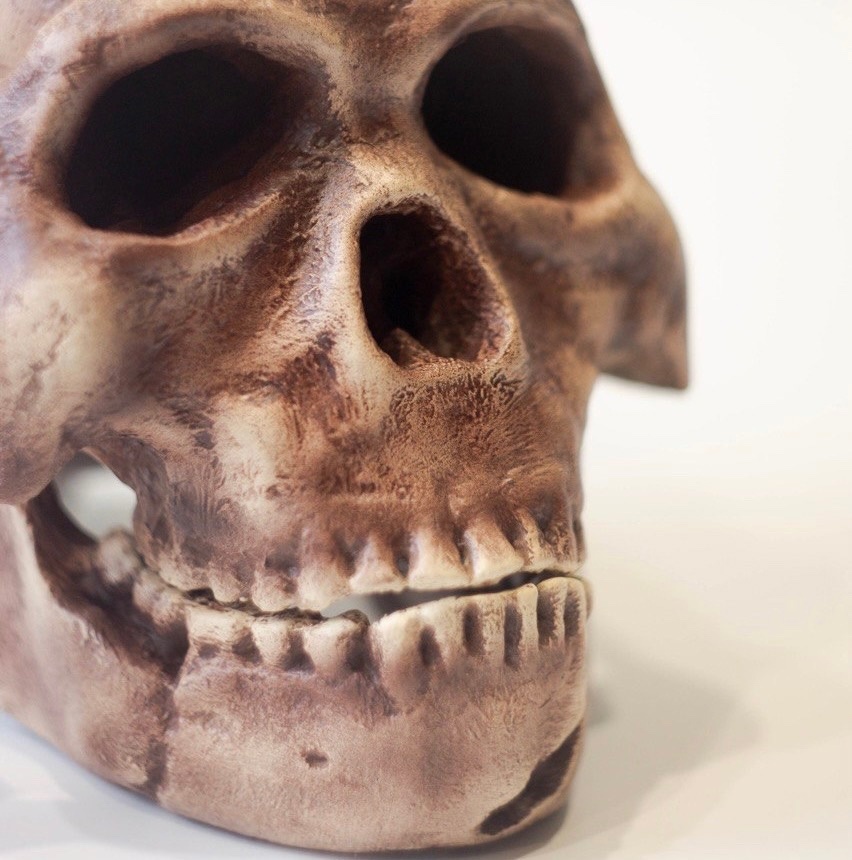
This method is more difficult than the first one, and the result heavily depends on the consistency of the primer.
For some masks, we need to ensure that the primer isn't visible at all — and this is the most challenging part. The thing is, after priming, you have to go over it with sandpaper quite aggressively several times, check for any remaining marks, and then prime again to hide scratches and create an ultra-smooth surface. This is the case, for example, with the Cyber Cat mask.
For some masks, we need to ensure that the primer isn't visible at all — and this is the most challenging part. The thing is, after priming, you have to go over it with sandpaper quite aggressively several times, check for any remaining marks, and then prime again to hide scratches and create an ultra-smooth surface. This is the case, for example, with the Cyber Cat mask.
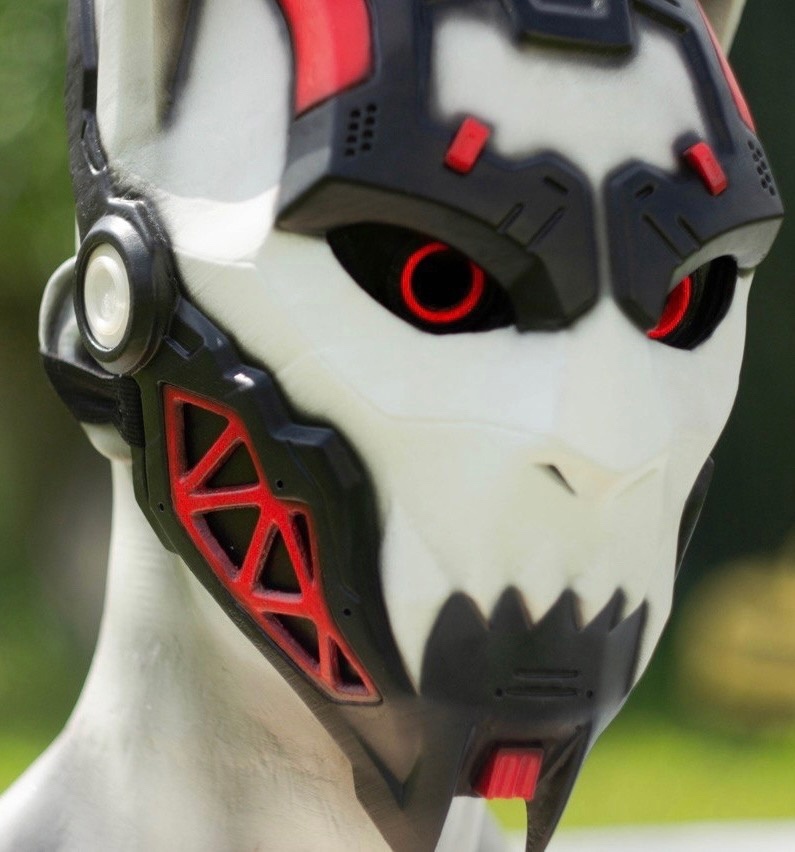
There are printers and materials that can create a perfectly smooth surface:
There are printers that print very smoothly using liquid resin, but this material is not suitable for masks as it is very brittle.
There is also cast plastic; this material is also smooth, but this material is not suitable for our workshop as we use a different manufacturing method.
Explore the products of the SkullMaskCraft workshop to see the full variety of textures.
There are printers that print very smoothly using liquid resin, but this material is not suitable for masks as it is very brittle.
There is also cast plastic; this material is also smooth, but this material is not suitable for our workshop as we use a different manufacturing method.
Explore the products of the SkullMaskCraft workshop to see the full variety of textures.
